
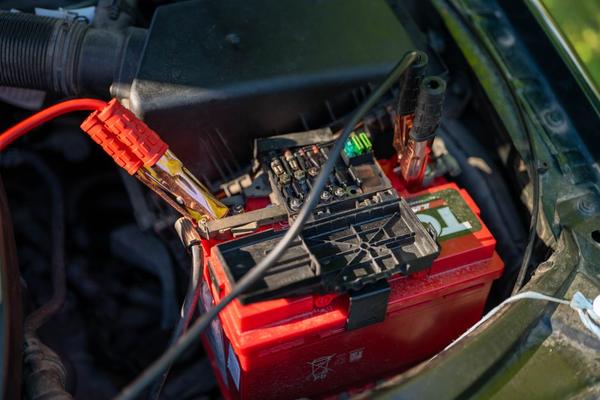
A car can develop a flat battery while parked even when nothing seems wrong. Alarm systems, keyless-entry electronics and other standby functions use small amounts of electricity, while batteries also lose charge naturally. That makes the trickle charger vs battery maintainer choice particularly relevant for UK drivers storing a classic car, keeping a second vehicle off the road or making fewer journeys in winter.
For long-term connection, a compatible smart battery maintainer is usually the better choice. A basic trickle charger can restore charge slowly, but may need supervision and disconnection once the battery is full. The important difference is what happens after charging, not just the rate at which electricity enters the battery.
The main difference: control at full charge
A traditional trickle charger supplies a small current over time. An older, basic model may continue supplying current even when the battery is full. Leaving an unsuitable unit connected indefinitely risks overcharging, excess heat, gassing and reduced battery life.
A battery maintainer monitors battery conditions and adjusts its output. A typical smart charger restores charge first, then switches to a maintenance stage or provides occasional top-ups. It compensates for gradual losses without treating a full battery as an empty one.
Names can mislead. Some products sold as “trickle chargers” already include automatic maintenance functions. Compare the actual charging programme and manufacturer’s instructions, not just the wording on the packaging.
How each device works
Basic trickle charger
Connect a low-output charger to a partly discharged 12V lead-acid battery and it will gradually replace energy. That can be useful when speed is unimportant. However, low current does not guarantee safe indefinite charging. If the charger cannot detect a full battery and regulate its output accordingly, someone must manage the charging session.
Automatic battery maintainer
A car battery maintainer typically charges in stages, reduces current as the battery approaches full charge and then maintains it. Some models hold a suitable float voltage; others pause and resume charging when needed. The correct programme depends on battery chemistry and the manufacturer’s specifications.
Lead-acid batteries benefit from being stored charged, but excess charging damages them. This matters particularly for sealed batteries, which should not be subjected to arbitrary charging settings.
Which is better for a car parked for weeks?
Imagine a weekend car stored in a UK garage from November until March. Its security system continues drawing electricity although the engine rarely runs. A properly matched smart maintainer approved for continuous connection can respond when the charge falls. An old-fashioned trickle charger may require periodic checking and disconnection.
By contrast, a daily driver parked for a week with a healthy battery may need neither. Repeated starting problems point to possibilities such as battery ageing, abnormal electrical drain or a charging-system fault. Keeping a charger permanently attached will not resolve those causes.
For supervised, occasional charging, a suitable basic charger may suffice. For several weeks or months of storage, the battery maintainer vs trickle charger decision normally favours a smart maintainer, assuming safe mains access and manufacturer-approved use.
Match the charger to your battery
Many conventional UK cars have a 12V starter battery, but chemistry varies. Flooded lead-acid, enhanced flooded (EFB) and absorbent glass mat (AGM) batteries can require different settings. EFB and AGM designs are common in vehicles with stop-start systems.
Read the battery label and car handbook. Choose a charger compatible with its voltage, chemistry and capacity range. An AGM mode is useful only when appropriate for that particular battery. Do not assume the most aggressive charging setting is the best one.
Lithium starter batteries require special consideration. A lead-acid float programme may be unsuitable. Use only charging and storage methods approved by the lithium battery manufacturer.
If your car repeatedly struggles to start, consider the separate questions covered in car battery warning signs and why car batteries go flat before assuming that storage is the only problem.
What to check before buying
A smart charger should clearly state whether it supports long-term maintenance. Its manual should explain what happens after full charge and how it behaves following a power interruption.
Check charging current as well. A small maintainer may preserve a healthy battery but take a long time to recharge a significantly discharged one. Select an output suitable for your battery capacity and intended use rather than buying purely on the highest amp rating.
Other useful features include reverse-polarity protection, short-circuit protection and temperature compensation. A UK outbuilding can be cold or damp; the charger’s environmental rating and operating-temperature range should suit the actual location. Convenient quick-connect leads are worthwhile only when installed as instructed.
How to connect a maintainer safely
Read the car and charger manuals first. Modern vehicles may specify dedicated charging posts or a chassis earth point, particularly when battery-monitoring sensors are fitted. Following those instructions helps ensure the car’s electrical management system is treated correctly.
Turn off the ignition and keep the battery area ventilated. Do not charge a leaking, swollen, damaged or frozen battery. With mains power disconnected, attach the leads in the specified order, choose the correct programme and only then supply power. Keep leads clear of moving parts and never allow clips to touch.
Do not leave a charger connected unattended for weeks unless the manufacturer expressly allows maintenance use in those conditions. If the battery still performs poorly after correct charging, arrange a battery and charging-system test. A maintainer cannot restore capacity lost through ageing or fix an internal defect; testing a car battery is the sensible next step.
Frequently asked questions
Can a trickle charger stay connected all winter?
Only when that specific model has a suitable automatic maintenance function and its instructions allow prolonged connection. Continuous low current alone is not proof of safe long-term use.
Is a battery maintainer the same as a smart charger?
Often, but not always. Many smart chargers offer a maintenance stage after charging. Look for an explicit float, monitoring or storage mode rather than assuming all automatic chargers are designed to stay connected.
Can a maintainer recharge a completely flat battery?
Not necessarily. Some provide too little current for practical recovery; others will not start when voltage is extremely low. A deeply discharged battery may require professional testing or replacement.
Must the battery be disconnected from the car?
Not necessarily. Many maintainers can charge installed batteries. Follow the vehicle handbook for connection points and precautions, rather than applying one method to every car.
Which should you choose?
Choose a compatible smart maintainer for a car left unused for weeks or months, especially where standby electronics continue drawing power. A simple trickle charger still has a place for supervised charging, but low output is no substitute for proper charge control. Check battery compatibility, safety features and instructions before deciding.