
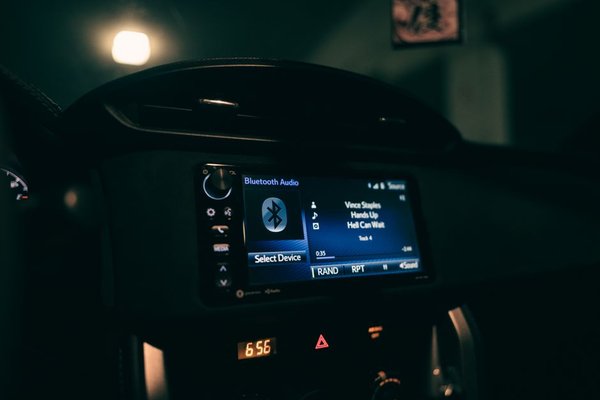
If your car has a perfectly good sound system but no way to stream music or answer calls wirelessly, you do not necessarily need a new dashboard. A Bluetooth car stereo upgrade can be as simple as adding an adapter or as thorough as fitting a modern radio. The right route depends on your existing connections, budget and whether keeping the original appearance matters.
First decide what you want: Bluetooth audio for music, hands-free calling, or both. Some inexpensive adapters handle music well but offer poor call quality. That distinction is more useful than choosing a product simply because its packaging says Bluetooth.
Check What Your Stereo Already Supports
Look for an AUX socket, USB port or phone menu. An AUX input is especially useful because it can accept sound from a Bluetooth receiver without replacing the factory radio. A USB port does not automatically support a Bluetooth dongle; older systems may only recognise storage devices or charge phones.
Some factory stereos offer Bluetooth calls but not music streaming. Pairing successfully does not guarantee both functions. Check the car handbook and record the make, model, year and exact audio-system version before ordering parts.
Choose the Right Way to Add Bluetooth
Bluetooth AUX Receiver: Best for a Stereo With an AUX Input
Connect the receiver to the 3.5 mm AUX socket, supply power as instructed, select the AUX source and pair your phone. Music and podcasts can then play through the car speakers. This approach is inexpensive, reversible and leaves the original radio in place.
For calls, select a receiver that explicitly supports a microphone and calling. A microphone buried near the gear lever may collect more road noise than your voice. Some Bluetooth receivers are for music only.
FM Transmitter: Useful When There Is No AUX Socket
An FM transmitter sends audio from your phone to an unused frequency on the car radio. Many plug into a 12V accessory socket and require no dashboard removal. They are useful for cars with limited upgrade options.
Sound quality can vary when nearby radio stations interfere with the chosen frequency, especially during long journeys. Set the frequency while parked and adjust volume carefully to avoid distortion. Treat this as a convenient compromise rather than a guaranteed high-fidelity solution.
Bluetooth Head Unit: A More Integrated Upgrade
A modern Bluetooth head unit can offer music streaming, a dedicated microphone, hands-free calling and physical playback controls. Certain models add DAB radio, USB charging or smartphone integration, but not all units include these features.
Replacing the stereo makes sense when you want fewer loose accessories or the old radio is unreliable. It also demands more preparation because the new unit must work with your car’s dashboard and wiring.
Check Fit, Wiring and Factory Features
Single-DIN and double-DIN describe common stereo mounting formats, not a promise of direct compatibility. A replacement may require a vehicle-specific fascia, mounting kit, aerial adapter and wiring harness. Check all components against your exact car and factory radio.
Ask whether steering-wheel buttons, parking sensors, a factory amplifier or an existing dashboard screen depend on the original system. Cars using CAN bus communication may need an additional interface to retain certain functions. A suitable car stereo adapter harness is generally preferable to cutting factory wiring.
Do not assume a new stereo automatically supports every original feature. If you want DAB, also check aerial requirements. Our guide to choosing a replacement car stereo is a useful companion when comparing receiver specifications.
Install Carefully and Test Before Closing the Dashboard
A plug-in Bluetooth receiver may only need pairing and a power connection. Replacing the head unit is more involved. Follow the car-specific removal procedure and manufacturer’s electrical instructions. Battery disconnection may be recommended, but some vehicles require codes or special procedures afterwards. Seek professional fitting for complex integrated systems or work near airbags.
Before replacing the trim, test radio reception, music, calling, speaker balance, steering-wheel controls and ignition behaviour. A unit that stays powered after the key is removed may have an incorrect accessory-power connection or require a suitable interface.
Consider an older hatchback with an AUX socket inside the glovebox. A receiver can stay hidden, but its microphone may need a better position near the driver. Make a test call with the engine running and heater fan on before securing it. A quiet driveway test can conceal road-noise problems.
Improve Call Quality and Fix Common Problems
Position a separate microphone where it clearly picks up speech without interfering with visibility, controls or airbag deployment. Follow the installation instructions when routing cables. For reliable hands-free calling, microphone location often matters more than the number of features advertised.
If music sounds distorted, check the phone output, receiver volume and stereo input level. Turning everything to maximum can cause clipping. If playback keeps dropping, remove outdated pairings, check which phone has priority and consult the manufacturer’s instructions for firmware updates.
Bluetooth cannot fix damaged speakers or interior rattles. Our guide to diagnosing car audio problems may help when the connection works but the sound is still poor. You can also explore our advice on improving in-car sound quality before replacing speakers unnecessarily.
Keep Phone Use Safe and Legal in the UK
Bluetooth does not make every phone interaction lawful. UK rules prohibit holding and using a mobile phone while driving, including when stationary in traffic. Hands-free access is allowed when the device is not held, but drivers must remain in proper control; distraction can still lead to prosecution.
Pair the phone, select music and prepare navigation before setting off. If a conversation becomes distracting, end it or stop safely. Rule 149 of the Highway Code gives further guidance on phones and in-car technology.
Frequently Asked Questions
Can I add Bluetooth without replacing my car stereo?
Yes. An AUX Bluetooth receiver works with a suitable AUX input. An FM transmitter is another option when no compatible audio input exists. Check whether the device supports both calling and music.
Will my steering-wheel controls still work?
With an external adapter, existing buttons usually continue controlling the original stereo but may not control phone tracks. A replacement head unit often needs a compatible steering-wheel control interface.
Why does my phone connect but music will not play?
The stereo may support calls only, the wrong input may be selected, or media audio may be disabled in the phone’s Bluetooth settings. Check the system’s capabilities before buying another accessory.
Is professional installation worth paying for?
It can be, particularly with factory amplifiers, integrated screens, unusual wiring or airbag-adjacent trim. Compare the full cost of the receiver, fitting and required adapters rather than the stereo price alone.
Choose the Upgrade That Fits Your Car
For an older car with AUX, start with a well-specified receiver. Without a compatible input, an FM transmitter offers an easy reversible option. If you want integrated controls and better microphone placement, consider a compatible Bluetooth head unit. Whichever route you choose, prioritise fit, call clarity and safe operation over flashy specifications.